
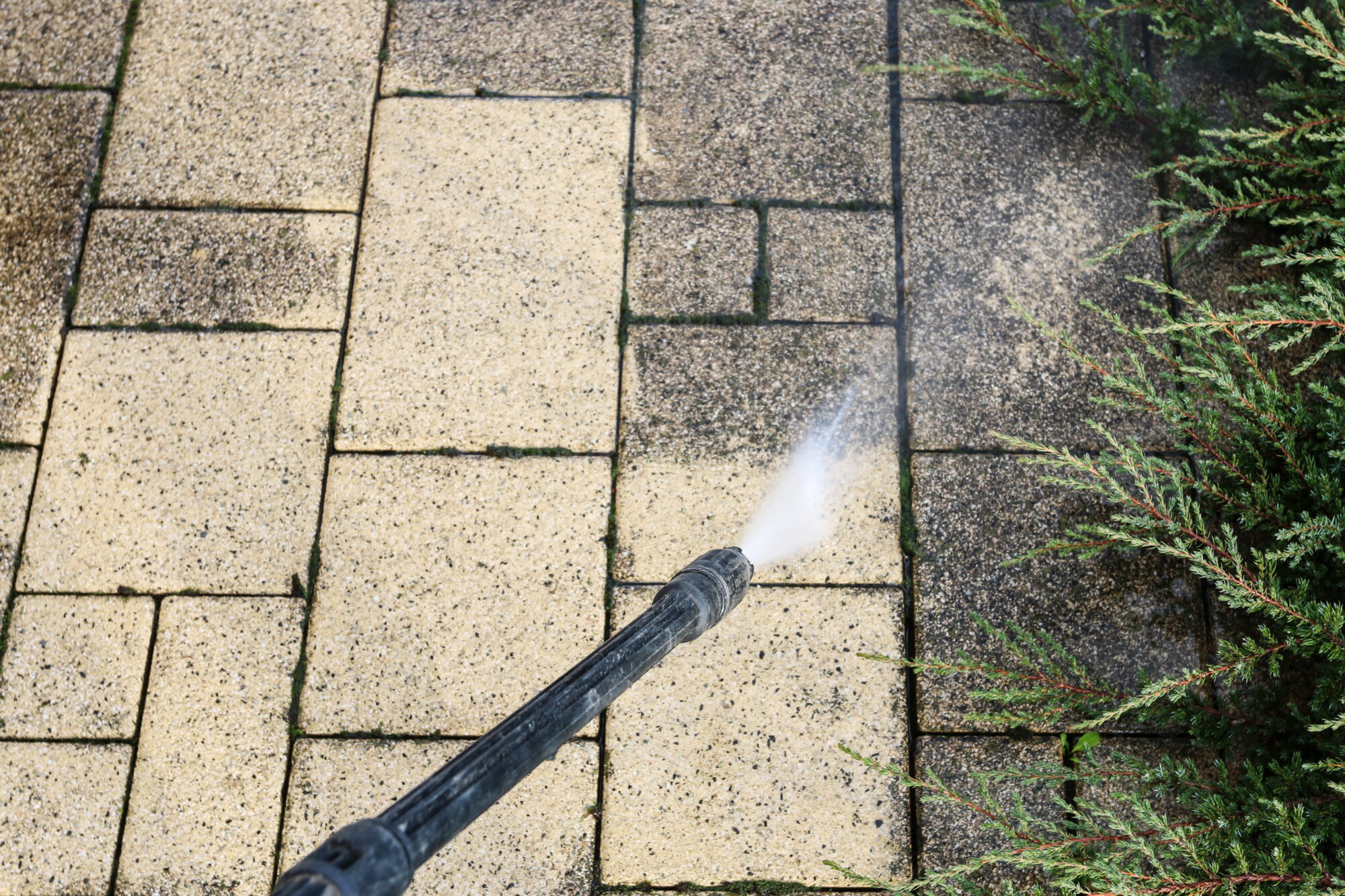
They can also become harder to manage without regular maintenance. Professional pressure washing helps restore their appearance by removing built-up dirt, grime, algae and surface staining.
Why external paved areas need regular cleaning
External paving is exposed to changing conditions every day.
Rain, traffic pollution, leaf fall, food and drink spillages, chewing gum, bird fouling and general footfall can all affect the condition of paved areas. Over time, leaving surfaces looking dull, stained or poorly maintained.
In commercial environments, this matters because external areas contribute to first impressions. For example, a stained entrance or neglected walkway affect how people perceive the wider property damaging brand consistency and reputation.
Regular external hard surface cleaning helps property teams maintain presentation standards and identify issues before they become more difficult to manage.
Supporting safer external spaces
An additional benefit of pressure washing is the effect on safety. If left untreated moss, algae, wet leaves and surface grime all contribute to slippery conditions. The HSE has found that slips and trips remain the most common cause of major injury in UK workplaces. Maintaining a clean environment is as much a safety requirement for building managers to consider as it is for appearance.
The operation itself needs to be managed carefully because it can create hazards while work is taking place. Exclusion areas, warning signage, access management and clear communication with site teams all help protect building users while cleaning is underway.
For busy commercial sites, cleaning may need to take place outside peak hours or during quieter periods to minimise disruption.
Improving presentation and kerb appeal
Entrances, courtyards and pedestrian routes all influence how a property is perceived. In addition, if paving is stained or unevenly soiled, the wider site can appear less cared for even when internal cleaning standards are high.
Surface restoration cleaning can help renew paving by removing dirt, matching colour consistency and reaching ingrained or more difficult areas to clean with traditional methods.
A planned cleaning schedule takes a proactive approach when considering inspections, events, tenant visits or client-facing activity. Where problem areas are routinely identified and adressed before they become unmanageable.
Choosing the right method for each surface
Some hard surfaces can tolerate higher pressure while others require a more controlled approach. Older stone, decorative paving, pointing, surface coatings or areas close to historic materials may need additional care.
Historic England advises that maintenance and repair of historic buildings should consider appropriate materials and treatment methods. This is useful advice when considering paved area pressure washing especially where stonework or sensitive surfaces are present.
How To Clean Pavement Slabs
Knowing how to clean pavement slabs properly depends on the surface type, level of staining and condition of the paving.
Damp or shaded paving can also develop algae, lichens, liverworts and moss. The Royal Horticultural Society discusses how they affect hard surfaces and how to remove algae from patios.
Surface assessments should be the starting point for commercial sites to provide an effective plan. Loose debris should be removed first, followed by suitable pre-treatment for moss, algae, oil marks or ingrained dirt. Pressure washing can then be used to restore the surface, with the method adjusted to avoid damaging the material.
The best way to clean block paving is not always the highest pressure setting. Professional paved area pressure washing should balance cleaning power with surface protection. An adaptable approach helps restore external hard surfaces safely and consistently.
Pressure washing within property maintenance
Paved area pressure washing works best as part of wider property maintenance rather than a one-off task.
External areas often need seasonal attention. Autumn leaf fall, winter grime, spring pollen and summer footfall can all create different cleaning demands. Cleaning frequency also needs to be aligned with environmental factors, such as busy roads, trees, car parks or loading bays.
A practical maintenance programme includes routine inspections, scheduled pressure washing, spot treatment for stains and periodic deeper cleaning for high-use areas.
| Area | Cleaning consideration |
|---|---|
| Entrances and walkways | High visibility, visitor access and slip risk |
| Courtyards and communal areas | Presentation standards and regular footfall |
| Car parks and loading bays | Oil marks, tyre residue, mud and operational staining |
| Bin stores and service yards | Spillages, odour control and hygiene |
| Retail frontages | Kerb appeal and customer experience |
| Shaded areas | Moss, algae and moisture retention |
This lets facilities teams prioritise the areas most likely to affect safety, appearance and day-to-day site use according to changing requirements.
Managing drainage and environmental considerations
Pressure washing should also take account of water run-off, drainage and nearby landscaping.
Loose dirt, detergents, oil residues or organic matter should be managed carefully so they do not create avoidable issues elsewhere on the site. In some locations, drainage systems, permeable paving or landscaped areas may influence how cleaning should be carried out.
Government guidance on sustainable drainage systems highlights the importance of managing surface water close to its source and considering long-term maintenance. For sites with permeable paving or SuDS features, cleaning plans should take drainage function as well as appearance into account.
Where detergents or treatments are required, they should be selected and used responsibly, with consideration for the surface, drainage routes and surrounding environment.
Reducing long-term staining and build-up
External hard surface cleaning can make paved areas easier to maintain over time.
When dirt, moss and staining are left untreated, surfaces can become harder to clean and may need more intensive intervention later. Routine cleaning helps prevent heavy build-up and supports a more consistent appearance across the site.
This is particularly important for high-footfall commercial environments where external areas are used every day. Planned pressure washing can help reduce visible staining around entrances, smoking areas, service yards, food outlets and main pedestrian routes.
Get In Touch
If you are looking for a specialist partner to support paved area pressure washing, we can help.
Our teams provide external hard surface cleaning and surface restoration cleaning for commercial properties, managed estates and public-facing environments.
Contact us today to learn more about our pressure washing and property maintenance cleaning services.