
High level areas are typically outside the scope of a daily cleaning schedule. Including them in a planned periodic schedule helps maintain standards across the whole building and avoids relying on reactive cleaning.
What Is High Level Cleaning?
High level cleaning covers surfaces that cannot be cleaned safely or effectively using normal floor-level methods and routine equipment.
There is no single height at which an area automatically becomes “high level”. The Health and Safety Executive (HSE) defines working at height according to the risk of someone falling far enough to cause injury, rather than by using a fixed measurement.
Some high level cleaning can be completed from the floor using extendable tools or water-fed systems. Other tasks require access equipment such as podium steps, mobile towers or mobile elevating work platforms.
The method should be selected around the building, the task and how the space is used.
When Does A Building Need High Level Cleaning?
High level areas often collect dust slowly, which means they can be overlooked until the build-up becomes visible from below.
Signs that high level cleaning is needed include:
- Dust on ledges and ceiling features
- Visible build-up around ventilation or light fittings
- Marks on high internal glazing
- Dust released or exposed during refurbishment work
- Areas that have not been included in previous periodic cleaning
- Cleaning required before an event, inspection or building handover
A site survey can identify areas outside the routine cleaning programme and establish a suitable maintenance frequency.
Which Areas Are Commonly Included?
The areas requiring high level cleaning depend heavily on the building.
In corporate offices, the work may focus on atrium structures, ceiling vents, acoustic panels, suspended lighting and high internal glazing. Retail buildings may need cleaning around escalator voids, signs, display structures and exposed services.
Whereas, theatres and heritage buildings often have decorative ledges, auditorium features and historic surfaces that need a tailored method.
Why High Level Areas Are Often Missed
Daily cleaning focuses on the areas people use and touch most frequently, such as floors, desks, washrooms, entrances and communal spaces.
High level areas sit outside of the normal cleaning schedule. They may require specialist equipment, additional time or temporary control of the space beneath them. Responsibility can also become unclear when the work falls between routine cleaning, window cleaning and building maintenance.
In our experience, this is where gaps can develop. An area may remain untouched for several years because it has never been clearly included in the specification.
Recording each high level area, its required standard and its cleaning frequency gives facilities teams greater control and avoids relying on reactive work.
Choosing The Right Access Method
The safest and most efficient method will depend on the height, duration of the task, floor conditions and surrounding building activity.
Where working at height can’t be avoided, suitable equipment and protective measures need to be selected before work begins.
| Access Method | Typical Application | Planning Considerations |
|---|---|---|
| Extendable tools | Vents, ledges, light dust and reachable features | Suitable reach, tool control |
| Podium steps or stepladders | Short-duration, low-risk tasks at limited height | Stable floor, equipment checks and avoiding overreaching |
| Mobile access towers | Larger internal areas requiring a stable working platform | Assembly, inspection, space requirements and controlled access |
| MEWPs | Atriums, tall structures, wide elevations and difficult internal access | Machine selection, floor loading, positioning and pedestrian routes |
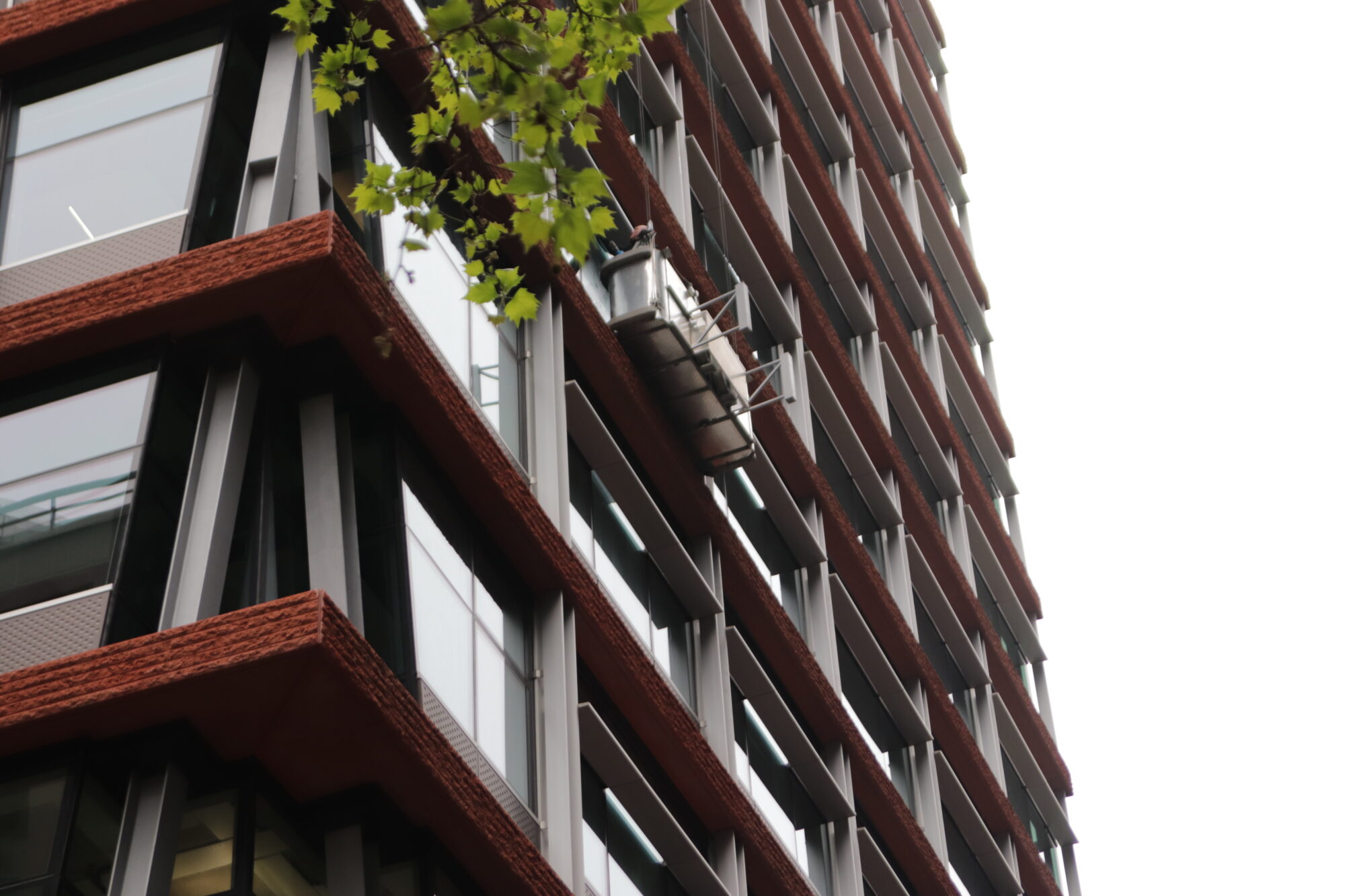
| Rope access or BMU systems | External glazing and complex building façades | Specialist competence, rescue planning and site-specific procedures |
Ladders and stepladders can be suitable for some low-risk tasks but HSE guidance makes clear that they should not automatically be the first choice.
Planning Work In An Occupied Building
High level cleaning can affect a much larger area than the surface being cleaned.
The space below may need to be isolated to protect employees, visitors and members of the public from falling dust, tools or cleaning materials. Furniture, displays and sensitive equipment may also need to be moved or covered.
Cleaning above reception desks, retail floors or busy circulation routes should be scheduled to take place before opening, overnight or during a planned closure. While less disruptive methods can be used during quieter operating periods.
For MEWP work, the equipment must be selected for the specific task and properly managed while in use.
How Often Should High Level Cleaning Be Scheduled?
There is no standard frequency that suits every commercial building.
A busy transport or retail environment may collect dust and debris more quickly than a low-occupancy office. Exposed services, open ceilings, nearby construction, ventilation patterns and the visibility of the area can also affect how often cleaning is needed.
Photographs, condition reports and the amount of material removed can help facilities teams decide whether the task should be completed quarterly, twice yearly, annually or at another suitable interval.
The frequency should then be reviewed if the building changes. Refurbishment, increased occupancy, new displays or changes to ventilation can all alter the cleaning requirement.
How We Plan High Level Cleaning
We identify the surfaces involved, how they can be reached and what is happening around them. The programme can then be planned around occupancy, public access, sensitive finishes and the required cleaning outcome.
Where specialist access is needed the equipment is selected to suit the building layout and site conditions. The work is then scheduled with the facilities team to control disruption and protect the surrounding area.
At sites such as Moor House, we use PEGO to give facilities teams visibility over planned tasks, completion records and follow-up actions. Having a clear plan and accurate reporting help prevent hidden areas from gradually falling below the standard maintained throughout the rest of the property.
Get In Touch
If high level areas within your building are difficult to access or sit outside the routine cleaning programme, we can help assess the requirement and develop a suitable schedule.
Contact our team to find out more about how we support commercial buildings with carefully planned high level, specialist and window cleaning services tailored around each site.
Read our recent case study to see how we carry out high level BMU Window Cleaning At 100 Fetter Lane.