
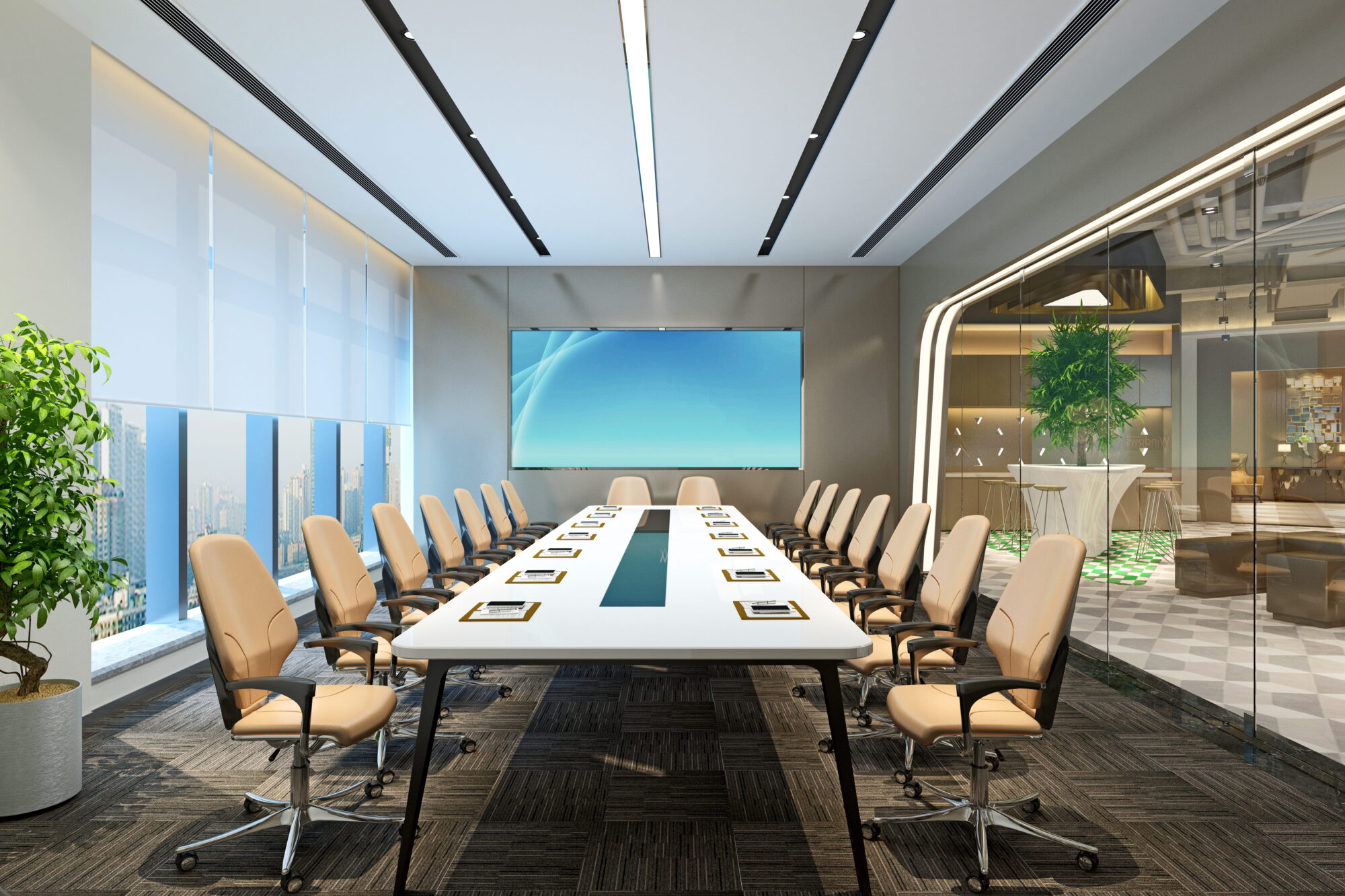
With meetings often booked back-to-back, even a short reset can be hard to fit in. This guide explains what each stage of meeting room cleaning should include. It also covers how often to clean and who should take responsibility, so every room is ready for its next booking.
Why Does Meeting Room Cleaning Matter?
Meeting rooms are some of the busiest shared spaces in any office. Colleagues, clients and visitors use them throughout the day. As a result, they quickly collect used cups, crumbs, fingerprints and misplaced chairs.
The condition of the room also shapes how people see your organisation. A tidy room helps an internal catch-up start on time. More importantly, it makes the right impression before a client presentation.
Hygiene matters too. Several groups may touch the same table, door handle and conference phone in a single day. These shared surfaces need regular, planned cleaning rather than an occasional wipe.
For facilities managers, the challenge is balance. Standards must stay high, but cleaning should not delay or disrupt meetings.
What Should a Between-Bookings Reset Include?
A between-bookings reset is not a full clean. Instead, it returns the room to a clean, tidy and usable condition in a few minutes. It should cover five tasks:
- Clear waste and used items. Remove papers, food packaging, used cups and any leftover catering.
- Check tables and work surfaces. Wipe away crumbs, spills and visible marks using a product suited to the surface.
- Reset the furniture. Return chairs to the agreed layout and keep walkways clear.
- Check shared equipment. Put remote controls, cables and pens back in place, and report any faults.
- Take a final look. Before leaving, view the room from the doorway as the next group will see it.
Which High-Touch Surfaces Need Attention?
A quick tidy often misses the surfaces people touch most. Therefore, your cleaning routine should name them clearly. Common contact points include:
- door handles and push plates
- light switches and room controls
- table edges
- chair arms and adjustment levers
- remote controls and conference phones
- touchscreens and booking panels
- whiteboard pens and erasers
It also helps to separate cleaning from disinfection. Cleaning removes dirt, grease and other contamination. Disinfection, on the other hand, uses specific products to reduce germs on a surface that is already clean. Most meeting rooms do not need disinfecting after every booking. However, it may be appropriate following a risk assessment or during an illness outbreak.
Whatever products you choose, they must be used safely. The Health and Safety Executive’s guidance on COSHH for cleaners explains how employers should control the risks from cleaning chemicals. HSE also publishes practical advice on manually cleaning and disinfecting surfaces.
Take extra care with technology. Only clean screens, touch panels and conference systems with methods the manufacturer approves. If responsibility for AV equipment is unclear, agree it with your facilities or IT team first.
A Practical Meeting Room Cleaning Checklist
A clear meeting room cleaning checklist sets out what happens and when. Use these frequencies as a starting point. Then adjust them to suit room size, booking levels and meeting types.
After Every Meeting
- Remove rubbish, used cups and catering waste.
- Check tables for crumbs, marks and spills.
- Return chairs to their correct positions.
- Make sure shared equipment is tidy and ready to use.
- Report any spills, damage or faults.
At the End of the Day
- Clean tables and high-touch surfaces to the agreed specification.
- Empty bins and replace liners.
- Vacuum or clean the floor.
- Remove fingerprints from glass doors and partitions.
- Return furniture and accessories to their set positions.
Weekly or Periodic Deep Clean
- Clean chair bases, table legs and hard-to-reach areas.
- Dust skirting boards, ledges and window sills.
- Carry out deeper floor or carpet cleaning.
- Check upholstery and specialist finishes for wear.
- Flag any maintenance issues.
A busy conference room may need more frequent attention. In contrast, a room booked once a week may need far less. The best schedule always reflects how the space is actually used.
How Should Boardrooms Be Cleaned?
Boardroom cleaning needs extra attention to detail. These rooms host senior leadership meetings and important client visits, so their appearance reflects directly on the business.
Boardrooms also tend to feature premium finishes. For example, polished timber tables, leather chairs and glass partitions may each need a different product or technique. The wrong product can leave smears, cause discolouration or damage the surface over time.
For this reason, agree cleaning methods for valuable furniture and specialist finishes in advance. Small details matter as well, such as smear-free glass and evenly spaced chairs.
How Can Daytime Cleaning Work Around Meetings?
Back-to-back bookings leave little time for cleaning. Daytime office cleaning can help, because a team on site can reset rooms as soon as they become free.
To make daytime cleaning work, facilities managers can:
- Use booking data. Where authorised, room booking systems or occupancy sensors can show when a room is free.
- Focus on peak times. Plan extra checks around the busiest periods, such as mid-morning and after lunch.
- Keep cleaning discreet. Quiet equipment and careful planning reduce noise and interruptions.
- Agree how to report issues. Make sure everyone knows who to contact and which tasks should wait.
The right approach depends on your building’s layout and daily activity.
Who Is Responsible for Meeting Room Cleaning?
Meeting room cleaning works best as a shared effort. Asking colleagues to take rubbish with them and leave rooms tidy is a sensible start. However, relying on room users alone often leads to inconsistent standards in busy offices.
A clear split of responsibilities usually works best:
- Room users: remove personal belongings and everyday waste, and return shared items.
- Facilities teams: set room standards, coordinate cleaning and report recurring issues.
- Professional cleaning teams: complete the agreed tasks, use the right products and carry out scheduled deep cleans.
At DOC Cleaning, we start by understanding each building and the people who use it. Our corporate headquarters cleaning keeps professional environments ready for business throughout the day. Through the DOC Way, we take ownership of our work and collaborate with clients on arrangements that fit their workplace.
Frequently Asked Questions
How often should meeting rooms be cleaned?
Give each room a quick reset after every meeting and a fuller clean at the end of each day. Then schedule a weekly or periodic deep clean, depending on how heavily the room is used.
Do meeting rooms need disinfecting after every use?
Not usually. Routine cleaning is enough for most meeting rooms. Disinfection may be needed after a risk assessment or during an illness outbreak.
Can meeting rooms be cleaned during office hours?
Yes. With good coordination and discreet working, daytime cleaners can reset rooms between bookings without disrupting meetings.
Talk to Our Team About Meeting Room Cleaning
Clean, well-presented meeting rooms help every booking start on the right note. Whether you manage a busy corporate headquarters or a smaller office, a clear routine keeps standards consistent all day.
At DOC Cleaning, we work with clients to design cleaning arrangements around their buildings, working patterns and priorities. Contact our team to discuss a meeting room cleaning routine that fits how your office works.