
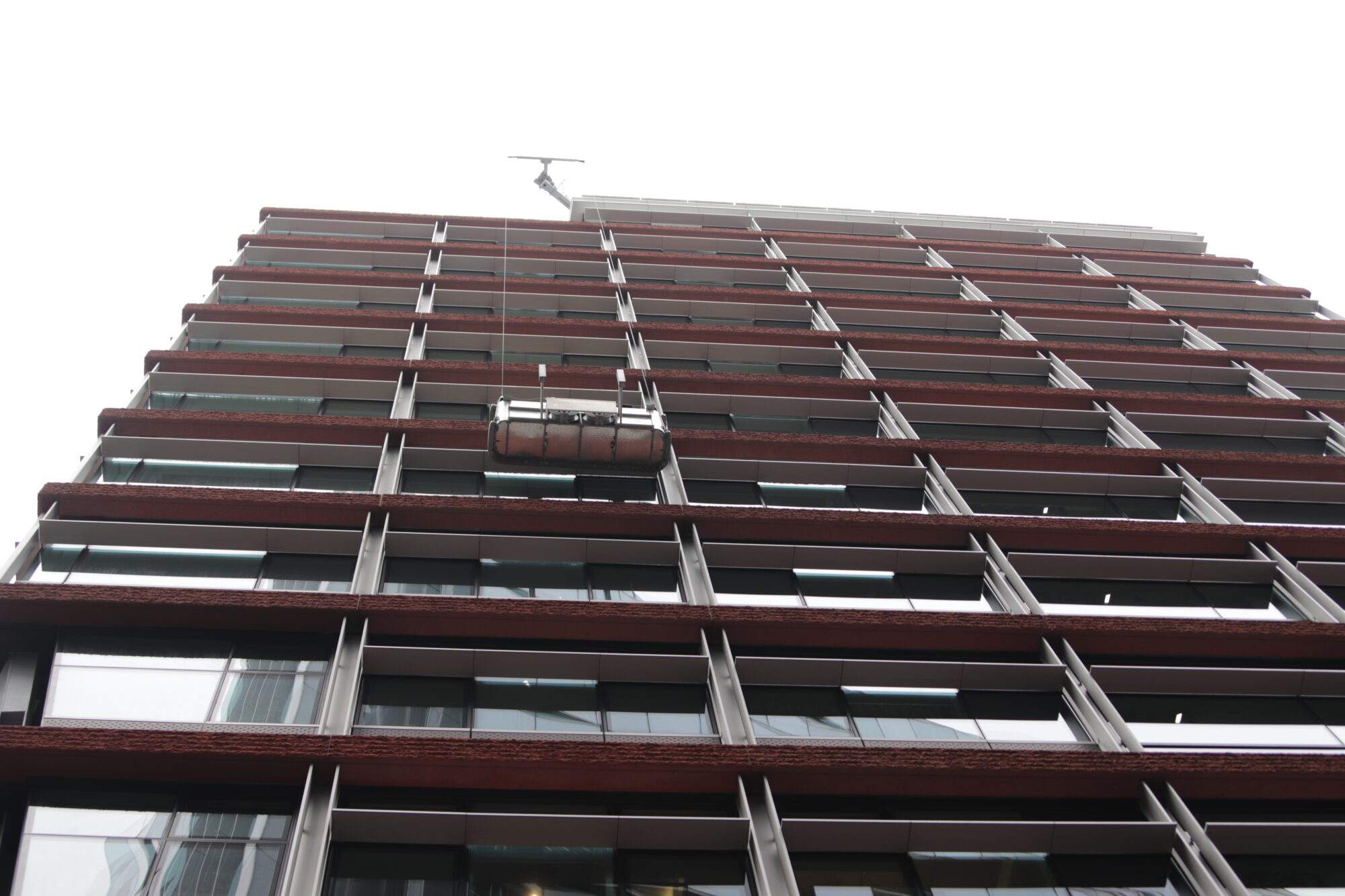
High-rise window cleaning is one of the most technically demanding areas of commercial cleaning. From restricted access and changing weather conditions to tenant disruption and safety compliance, every project requires specialist planning.
Why high-rise window cleaning is more complex than standard commercial cleaning
Unlike traditional window cleaning, high-rise window cleaning involves specialist access systems, detailed risk assessments, strict safety procedures and carefully coordinated scheduling.
Commercial buildings may include curtain wall façades, restricted roof access, public areas, shared occupier spaces and complex architectural features.
Each of these factors creates additional operational considerations for cleaning teams. The challenge is not simply cleaning windows at height. It is maintaining safe, consistent cleaning standards while minimising disruption to occupants, visitors, and the surrounding environment.
Access restrictions on modern commercial buildings
One of the biggest operational challenges in high rise window cleaning is building access.
Restricted roof and ground access
Many commercial buildings were not originally designed with ongoing façade maintenance in mind. This can create significant limitations when planning safe access routes and selecting suitable cleaning methods.
Common access challenges include restricted roof access, narrow pedestrian zones, underground loading areas and difficult façade angles. Many buildings therefore rely on specialist methods such as rope access, BMU systems, MEWPs or water fed pole cleaning for lower elevations.
Selecting the correct access method is one of the most important parts of project planning.
Limited ground level access
Busy commercial environments can create restrictions around pedestrian routes, loading areas and surrounding public spaces. This can affect equipment positioning and requires careful operational planning.
In dense city centre locations, cleaning teams often need to coordinate access around delivery schedules, public footfall and neighbouring occupiers. Without detailed planning, even relatively simple cleaning projects can quickly become operationally disruptive.
Weather conditions and environmental exposure
Weather is another major operational challenge in high-rise window cleaning.
Wind exposure and changing conditions
Unlike lower level cleaning, high-rise operations are heavily influenced by environmental conditions, particularly wind speeds.
High-rise buildings often create wind tunnels and unpredictable airflow patterns around façades. Conditions can change rapidly throughout the day, which can affect:
- Rope access safety
- Water runoff control
- Equipment stability
- Visibility for operatives
- Drying times on glazing
Operations may need to be postponed if conditions exceed safe working limits.
Environmental exposure on commercial towers
High-rise buildings are constantly exposed to pollution, airborne debris and changing weather conditions. Towers located near major roads or transport hubs often experience significantly faster dirt accumulation.
This creates additional pressure on facilities teams to maintain external glazing standards while balancing operational costs and cleaning frequency.
Pollution and environmental build up
Coastal buildings and exposed city centre towers may also experience:
- Increased pollution staining
- Salt residue build up
- Faster dirt accumulation
- Greater environmental wear
As a result, cleaning schedules often need to be adapted based on the building’s location and exposure.
Managing disruption in occupied buildings
Many high rise buildings remain fully occupied during cleaning works.
Balancing maintenance with tenant experience
This creates another major operational challenge. Facilities teams must balance essential maintenance with tenant experience, business continuity and public safety.
Potential disruption may include restricted entrances, temporary exclusion zones, visual distractions and equipment noise. Experienced cleaning providers reduce disruption through phased scheduling, clear communication and careful coordination with site teams.
Coordinating cleaning around occupied spaces
High rise cleaning projects often take place while buildings remain fully occupied. This means contractors must work carefully around tenant activity, meeting schedules, and public access routes.
Strong communication between cleaning teams, facilities managers, and occupiers helps minimise complaints while maintaining safe and efficient operations throughout the project.
Effective planning helps maintain operational efficiency while minimising complaints.
Health and safety compliance
Health and safety is central to every high-rise window cleaning project.
Working at height regulations and compliance
Working at height remains one of the highest risk activities within the facilities management sector.
Cleaning contractors must comply with Working at Height Regulations, LOLER requirements, PPE standards and site-specific risk assessments.
Facilities managers should ensure contractors provide detailed RAMS documentation, rescue planning and evidence of specialist training.
Specialist training and operational competence
High-rise cleaning requires far more than general cleaning experience. Operatives must understand specialist access systems, rescue procedures, equipment inspections and working at height regulations.
Experienced contractors also understand how to adapt operational plans to different building types, occupier requirements, and environmental conditions while maintaining consistent safety standards.
Health and safety should form part of the wider operational strategy for maintaining the building.
Coordinating multiple access systems
Modern commercial developments often require multiple cleaning methods across the same site.
Combining access methods across complex buildings
For example, a single building may require:
- Rope access for upper façades
- MEWPs for lower elevations
- Water fed poles for entrance glazing
- Specialist internal access for atriums
Coordinating these systems efficiently can be complex. Different access methods involve separate operational teams, scheduling requirements, safety controls and equipment needs.
Integrated maintenance strategies help ensure all areas of the building are cleaned consistently while minimising operational downtime.
Managing operational efficiency across large sites
Large commercial developments often involve multiple cleaning zones, separate access systems, and varying operational requirements across the same building.
Without effective coordination, projects can become inefficient, increasing both disruption and operational costs. Integrated planning helps ensure teams work efficiently while maintaining consistent cleaning standards across the site.
Façade design and architectural complexity
Modern architecture has introduced increasingly complex façade systems.
Complex glazing systems and architectural features
While visually impressive, these designs can create major maintenance challenges.
Common examples include recessed glazing, angled curtain wall systems, glass fins, large atriums, and mixed material façades. These features often require specialist access planning and additional safety controls.
Complex architecture can also create inconsistent dirt accumulation caused by airflow and water runoff patterns.
Access planning for specialist façades
Architectural features such as recessed glazing, angled façades and large atriums require bespoke access strategies. Standard cleaning methods may not provide safe or effective coverage across every elevation.
This is why specialist façade maintenance programmes are essential for modern commercial buildings with complex external designs.
Budget pressures and maintenance expectations
Facilities teams are increasingly expected to maintain premium building presentation while managing operational budgets carefully.
Balancing cost control with presentation standards
This creates tension between:
- Cleaning frequency
- Building appearance
- Tenant expectations
- Long term maintenance costs
Reducing cleaning frequency may appear cost effective in the short term.
Protecting long term building value
External glazing and façades play a major role in overall building presentation. Delayed maintenance can lead to staining, deterioration and increased restoration costs over time.
Planned cleaning programmes help property managers protect both asset value and tenant perception while reducing the likelihood of larger maintenance issues developing later.
The hidden cost of delayed façade maintenance
Over time, dirt build up and environmental staining can:
- Affect building appearance
- Damage façade materials
- Increase restoration costs
- Impact tenant perception
Planned maintenance programmes help facilities managers balance cost control with long term asset protection.
Sustainability and environmental considerations
Sustainability is becoming a growing priority across commercial property management.
ESG expectations and sustainable operations
High rise window cleaning providers are increasingly expected to demonstrate:
- Reduced water usage
- Sustainable cleaning products
- Efficient access planning
- Lower environmental impact
- Waste reduction strategies
Many buildings now incorporate ESG targets into supplier expectations.
Reducing environmental impact in cleaning operations
As a result, cleaning contractors must show how their operations support broader sustainability objectives.
This may include pure water cleaning systems, reduced chemical usage, route optimisation and digitised reporting.
Environmental performance is now an increasingly important part of contractor evaluation.
Sustainable cleaning technologies and reporting
Many commercial clients now expect cleaning contractors to demonstrate measurable sustainability performance. This includes reduced water usage, efficient route planning, and lower environmental impact across operations.
Digitised reporting and sustainable cleaning technologies also support broader ESG strategies, helping facilities teams track environmental performance more effectively.
Why specialist experience matters in high-rise window cleaning
Every high-rise building presents a unique operational environment.
Why building specific experience matters
There is no universal approach to high-rise window cleaning. Every commercial building presents different operational challenges based on its height, façade design, access limitations, occupancy levels and surrounding environment.
A strategy that works effectively on one building may be completely unsuitable for another. This is particularly important for mixed use developments, occupied office towers and architecturally complex buildings where cleaning operations must be carefully integrated into the wider day-to-day operation of the site.
Experienced contractors understand how to adapt cleaning programmes to each building individually while maintaining consistent safety, efficiency and presentation standards.
What facilities managers should expect from specialist providers
Facilities managers should expect successful projects depend on:
- Detailed planning
- Experienced operatives
- Appropriate access methods
- Clear communication
- Strong health and safety management
- Flexible scheduling
For commercial landlords and facilities managers, choosing the right window cleaning partner is essential.
A specialist contractor will understand not only how to clean the building safely, but how to integrate cleaning operations into the wider operational requirements of the site.
Partner with DOC Cleaning for high-rise window cleaning services
We provide specialist high-rise window cleaning services for commercial buildings, corporate headquarters, mixed-use developments and landmark properties across the UK.
Our teams are experienced in:
We work closely with facilities managers, property managers and landlords to deliver safe, efficient and carefully planned cleaning programmes tailored to each building.
To learn more about our high-rise window cleaning services, contact our team today.
Get in touch
If you are looking for a specialist partner to support your high-rise window cleaning requirements, we can help.
We provide rope access window cleaning, BMU cleaning, MEWP access cleaning and specialist façade maintenance for commercial buildings, corporate headquarters and mixed-use developments across the UK.
Our teams work closely with facilities managers and property teams to deliver safe, carefully planned cleaning programmes that minimise disruption while maintaining high standards across every building.
Contact us today to learn more about our high-rise window cleaning services.