What Is Limescale?
Limescale is usually caused by hard water.
Water hardness is caused by dissolved calcium and magnesium, which is why hard water areas are more likely to experience visible mineral deposits on washroom surfaces. When hard water evaporates or is heated these minerals separate from the water and remain on the surface, gradually forming the hard chalky build-up known as limescale.
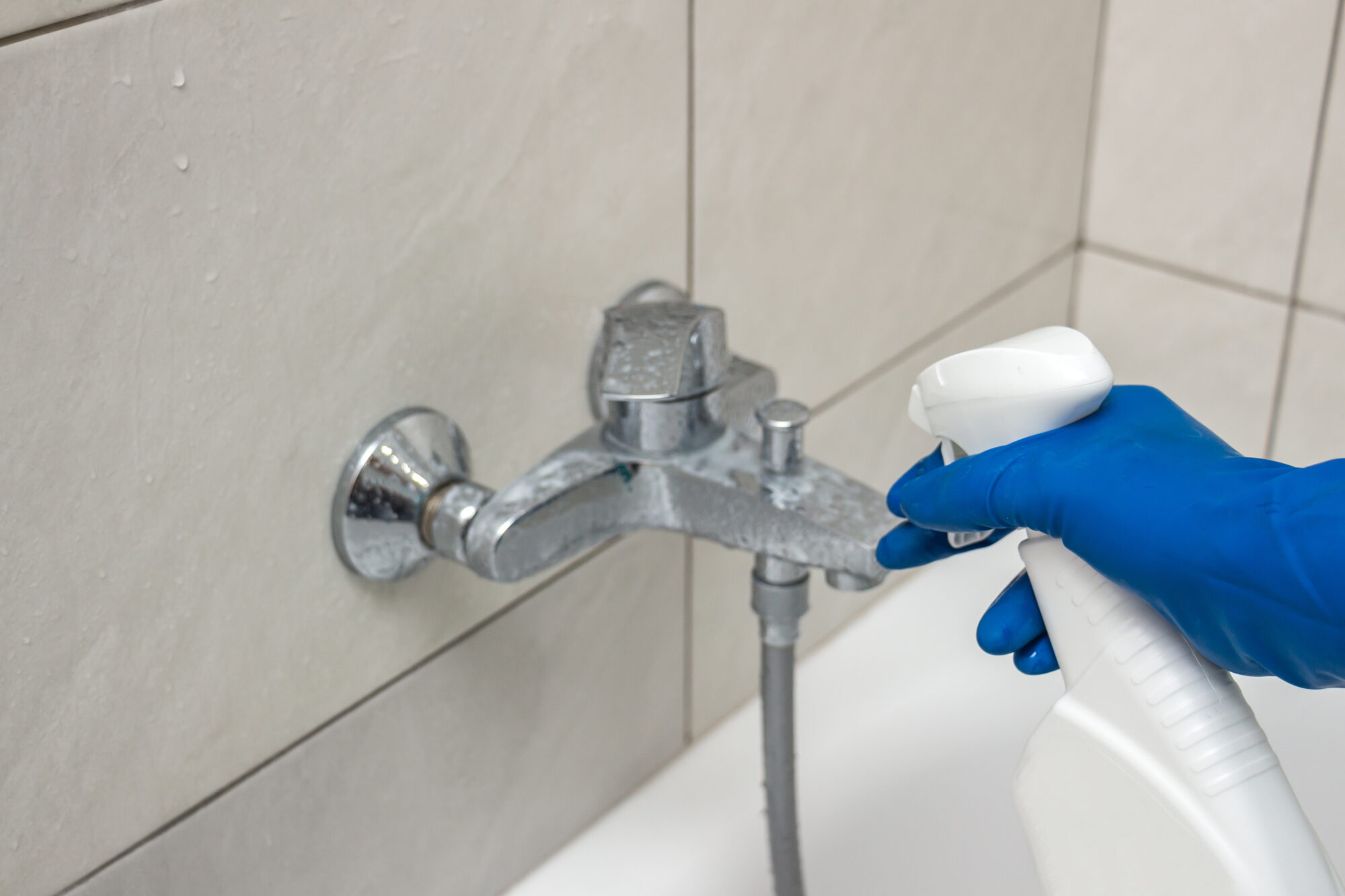
It can also build up in less visible places such as behind taps, under rims, around flush outlets and inside shower fittings.
Why Limescale Builds Up In Office Bathrooms
Every time taps, showers, urinals or toilets are used water can settle on nearby surfaces. In hard water areas, repeated water contact increases the chance of bathroom limescale forming.
This is especially an issue in London and the South East, where hard water is common. Facilities teams managing offices, retail spaces, leisure centres, education buildings or public venues may find that limescale returns quickly unless it is included in the regular cleaning schedule.
Common Areas Affected By Limescale
Limescale is most likely to appear where water regularly sits, drips or evaporates.
This includes:
- Taps and mixer valves
- Basins and vanity units
- Shower heads and hoses
- Toilet pans and flush outlets
- Urinals and pipework
- Glass screens and mirrors near water sources
- Tiles, grout and splashback areas
- Floor edges around wet zones
These areas should be checked regularly as part of office bathroom cleaning.
Why Limescale Is Different In Office Bathrooms
Limescale builds up faster in high-use bathrooms because the same fixtures are used repeatedly throughout the day.
In an office, retail site, leisure centre or public building, taps, basins, toilets and urinals may be used hundreds of times in a single week. Even if the washroom is cleaned daily water can continue to sit around hard to reach areas.
This is why facilities teams often find that limescale returns quickly after cleaning. The issue is often a combination of hard water, high usage, fixture design, surface type and how quickly wet areas dry between uses.
Limescale Removal Product Choice
A basin tap with light water marks may only need routine attention, while urinals, toilet outlets and shower fittings can need a more targeted descaling process. This is where the cleaning specification should be clear about which areas need daily cleaning and which areas need periodic treatment.
At many of our sites, BioHygiene products are used during our scheduled cleaning. BioHygiene Organic Descaler can be useful for mineral deposits on suitable surfaces, while BioHygiene Urinal & Toilet Cleaner/Descaler is more use specific for toilet and urinal areas where scale and odour are more intense.
These products reflect a shift in commercial cleaning towards more carefully selected solutions. Products with natural ingredients, biodegradable formulations or recycled packaging can support sustainability goals and achieve better cleaning standards.
Surface suitability still needs to be checked before descaling. Materials like marble, limestone, natural stone can be damaged by the wrong product, so heavier limescale removal should be planned with the surface in mind.
Practical Cleaning Steps
Heres how limescale removal works:
- Removing loose dirt and visible residue first
- Applying a suitable descaling product where needed
- Allowing the correct contact time
- Agitating the area carefully with a suitable cloth, pad or brush
- Rinsing the surface thoroughly
- Drying or polishing fittings to reduce water marks
- Reporting heavy build-up or damaged fittings
Cleaning teams should always follow the product instructions and site method statements.
Health And Safety Considerations
Because descaling can involve cleaning chemicals, the HSE’s COSHH guidance is useful for understanding how employers should manage exposure to substances that may affect health.
Products should not be mixed. This is especially important in washrooms, where different cleaning products may be used for toilets, surfaces, odour control and descaling.
Wet floors also need to be managed carefully. If descaling work takes place during opening hours, cleaning may need to be completed in sections with suitable signage, barriers or access control.
How Washroom Deep Cleaning Is Useful
Washroom deep cleaning is often needed to deal with heavier build-up.
A bathroom deep cleaning schedule often includes detailed descaling. This work is usually more detailed than daily cleaning and may need to be completed outside busy periods.
Washroom deep cleaning is especially useful in:
- High-occupancy offices
- Public buildings
- Leisure centres and gyms
- Education settings
- Retail and hospitality environments
- Multi-tenant commercial buildings
The frequency should depend on water hardness, footfall, surface type and how quickly scale returns.
Preventing Limescale From Becoming A Recurring Problem
Can is effectively managed with the right routine. The best approach combines regular cleaning, suitable products, trained operatives and periodic deep cleaning.
Facilities teams can also review whether recurring limescale is linked to water use, dripping fittings or washroom design. Waterwise highlights the importance of using water efficiently, making washroom maintenance important for cleaning standards and sustainability.
Good washroom management is about planning cleaning around the way the bathroom is used.
When Professional Support Is Needed
Professional support may be needed when limescale has become widespread or difficult to remove safely.
A professional cleaning team can assess the condition of the area and choose a method that balances cleaning effectiveness with surface protection.
For commercial buildings, the goal should be consistent management rather than occasional recovery cleaning. Regular reviews help keep standards under control and reduce the risk of limescale becoming a visible maintenance issue.
Get In Touch
Our teams provide professional cleaning services for offices, commercial buildings and managed facilities tailored schedules according to each site’s needs.
Get in touch today to discuss commercial cleaning support.