
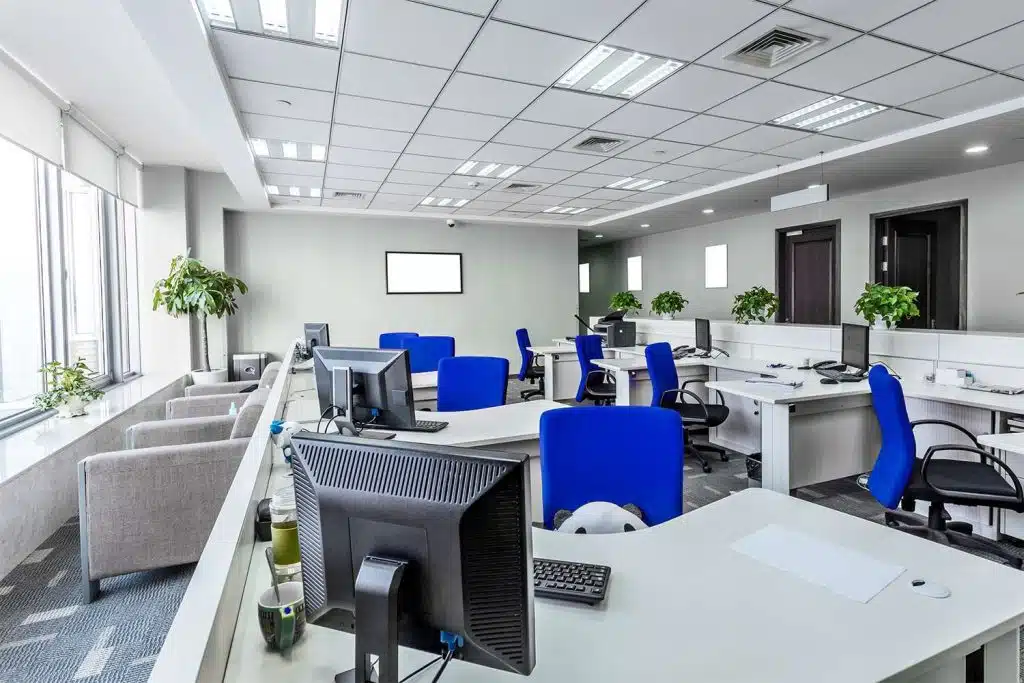
Commercial office environments are becoming more complex. Hybrid working patterns, higher expectations around hygiene and increasing ESG responsibilities mean that cleaning specifications must go beyond basic task lists.
Facilities managers responsible for large office portfolios require clear, transparent cleaning specifications that define service scope, standards and accountability. These documents also help ensure that cleaning providers remain aligned with modern industry trends.
Forward thinking specifications now include sustainability measures, digital monitoring tools and structured quality control processes. By incorporating these elements, organisations can maintain consistent standards while supporting operational efficiency.
This article explores what facilities managers should include in a commercial cleaning specification for large office buildings in 2026.
Why cleaning specifications are evolving in 2026
Office environments have changed significantly in recent years. Hybrid working patterns and fluctuating occupancy levels mean that cleaning services must be flexible and responsive to building usage.
Large office buildings often accommodate multiple tenants, shared facilities and high levels of daily footfall. This creates a need for cleaning programmes that can adapt to changing activity levels throughout the building.
Modern cleaning specifications are therefore moving towards more intelligent and data informed service models.
Industry research referenced by EnviroClear indicates that more than 70 percent of UK offices now operate hybrid working schedules. This shift has increased demand for flexible cleaning approaches that respond to occupancy patterns rather than static schedules.
As a result, cleaning specifications in 2026 are increasingly incorporating technology, sustainability initiatives and stronger performance monitoring.
Defining the scope of work for large office buildings
A cleaning specification must clearly outline the scope of services required across the entire building. Large office environments contain many different spaces, each with specific cleaning requirements.
Facilities managers should ensure the specification covers all operational and communal areas within the building.
Typical areas included in the cleaning scope may include:
-
Open plan offices and workstations
-
Meeting rooms and conference spaces
-
Reception and front of house areas
-
Washrooms and shower facilities
-
Kitchens and breakout areas
-
Stairwells, lifts and communal corridors
-
Bicycle storage areas and car parks
-
Back of house and service areas
By defining the full building scope, facilities teams ensure that no areas are overlooked within the cleaning programme.
Clear scope definitions also help cleaning providers allocate the appropriate staffing levels and equipment required to maintain consistent standards.
Services commonly included within office cleaning specifications
In addition to routine daily cleaning, large office buildings typically require a range of specialist services to maintain both hygiene and building presentation.
Facilities managers often include the following services within a commercial cleaning specification:
-
Washroom consumable supply and management
-
Commercial office cleaning services
-
Window cleaning programmes
-
Carpet cleaning and hard floor maintenance
-
External cleaning and building maintenance
-
Waste management and recycling services
-
Disaster recovery and emergency cleaning
Including these services within the specification allows building managers to maintain a coordinated approach to cleaning across the entire property.
This approach ensures both interior environments and external areas remain well maintained.
Using technology to support modern cleaning programmes
Technology is playing an increasingly important role in commercial cleaning services. Large office buildings benefit from digital tools that improve transparency and efficiency across cleaning operations.
As office occupancy patterns fluctuate, data driven cleaning helps ensure services are delivered where they are needed most.
Data driven cleaning systems
Digital tracking tools and building sensors allow facilities managers to monitor footfall patterns across the building. These insights can then be used to adjust cleaning schedules and deploy cleaning teams more effectively.
Examples of technology used in modern cleaning programmes include:
-
IoT occupancy sensors
-
Digital task management platforms
-
Smart washroom monitoring systems
-
Real time cleaning verification tools
Systems such as Taqt allow cleaning teams to record completed tasks and provide proof of service. This creates a transparent record of cleaning activity across the building.
Co-botics and autonomous equipment
Autonomous cleaning equipment is also becoming more common in large office environments. Robotic floor scrubbers can maintain large open areas such as entrance halls or communal corridors.
These technologies support cleaning teams by improving consistency while allowing staff to focus on more detailed tasks.
Data driven systems and co-botics therefore help cleaning providers deliver efficient services while supporting cost control and service transparency.
Sustainability considerations within cleaning specifications
Environmental sustainability is becoming a central component of commercial cleaning specifications. Many organisations now require cleaning services to align with broader ESG objectives.
This includes reducing environmental impact while supporting healthier indoor environments.
Facilities managers often specify the use of eco certified cleaning products and sustainable operational practices.
Sustainable cleaning products
Environmentally responsible cleaning products are increasingly used across commercial buildings. Products such as BioHygiene cleaning agents are designed to be non toxic and environmentally certified while still delivering effective cleaning performance.
Using eco friendly cleaning products can contribute to improved indoor air quality.
Research published by the UK Green Building Council indicates that indoor air quality can improve significantly when environmentally responsible cleaning products are used consistently.
Considering that people spend around 90 percent of their time indoors, maintaining good indoor air quality is an important factor in workplace wellbeing.
Supporting ESG objectives
Cleaning providers can also support organisational ESG goals through responsible waste management, reduced water usage and energy efficient equipment.
Forward thinking cleaning programmes therefore contribute not only to building cleanliness but also to environmental responsibility.
Quality control and performance management
Managing cleaning services across large office portfolios requires clear performance monitoring. Without structured quality control systems, service standards can become inconsistent.
Cleaning specifications should therefore define how service delivery will be measured and monitored throughout the contract.
Establishing clear accountability
Facilities managers often define key performance indicators that allow cleaning performance to be measured objectively.
Common cleaning service KPIs include:
-
Task completion rates
-
Cleaning audit scores
-
Response times to reactive cleaning requests
-
Occupant satisfaction feedback
-
Net Promoter Score performance
Digital platforms such as FacilityApps and Taqt can record task completion and provide verifiable service records.
These systems create auditable proof of service delivery and help reduce disputes between service providers and clients.
Regular performance reviews also ensure cleaning providers remain aligned with agreed service objectives.
Audits and compliance requirements
Routine inspections and documented audits help ensure cleaning standards remain consistent throughout the contract period.
Regular audits support quality assurance while identifying potential issues before they escalate.
Effective audit programmes can:
-
Verify that cleaning tasks are being completed as specified
-
Identify performance gaps early
-
Support continuous service improvement
-
Demonstrate compliance during inspections
-
Provide evidence of due diligence
Cleaning providers must also comply with all relevant health and safety regulations.
For example, the Control of Substances Hazardous to Health Regulations require employers to assess risks associated with hazardous substances such as chemicals, dust and biological contaminants.
Ensuring compliance with these regulations protects building occupants, cleaning teams and property owners.
Communication and partnership management
Effective communication plays a critical role in maintaining successful cleaning contracts, particularly within large office buildings.
Cleaning specifications should outline clear communication procedures between facilities teams and service providers.
A strong communication framework typically includes:
-
Named contacts and escalation procedures
-
Regular service review meetings
-
Structured feedback channels for building occupants
-
Clear reporting processes for service performance
Transparent communication helps ensure issues are addressed quickly and expectations remain aligned throughout the contract.
This collaborative approach also strengthens long term partnerships between facilities managers and cleaning providers.
How DOC Cleaning supports modern office cleaning programmes
Our office cleaning services are designed to support large office buildings with evolving workplace requirements.
We combine experienced cleaning teams with modern technology, sustainable cleaning practices and structured reporting systems. This approach provides facilities managers with full visibility over service delivery.
Our Beyond Cleaning strategy underpins every contract we deliver. Through our four strategic pillars Empowering Our People, Creating A Positive Legacy, Inspiring Bold Action and Ensuring Safer Spaces, we help organisations create workplaces that support both people and the environment.
By combining reliable service delivery with innovation and sustainability, we support facilities teams responsible for complex office environments.
Preparing your office portfolio for the future
Forward thinking cleaning specifications help large office buildings meet evolving workplace expectations while supporting sustainability and operational efficiency.
If you are reviewing your commercial cleaning specification for 2026, our team can help you design a cleaning programme that supports your building portfolio.
We would be happy to discuss how modern cleaning strategies, technology and sustainable practices can strengthen your workplace environment.